
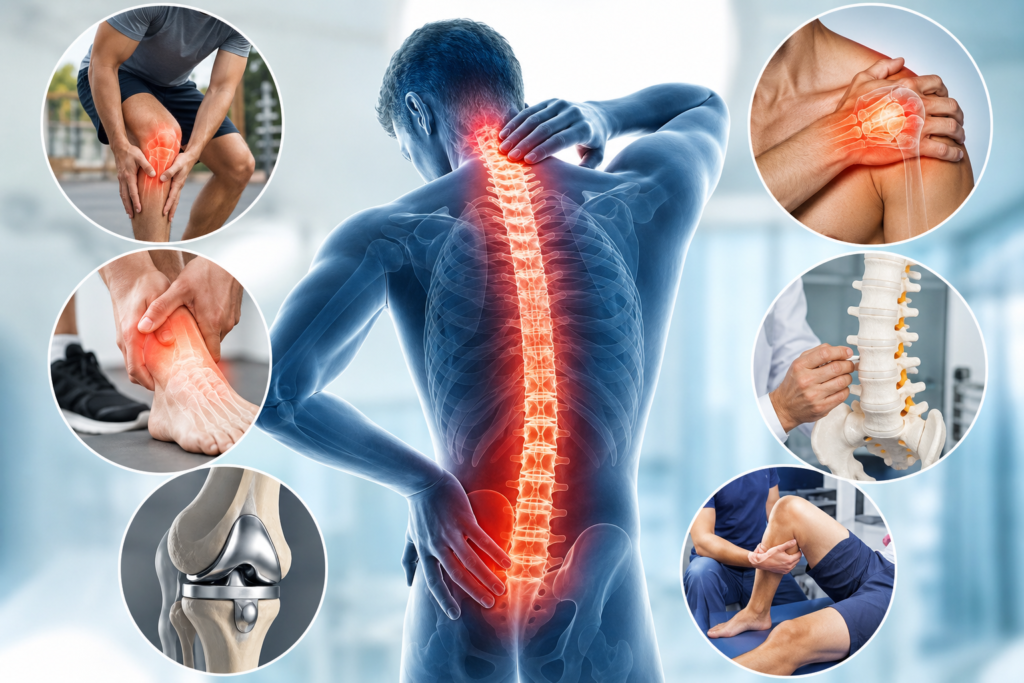
Orthopaedic health plays an important role in maintaining movement, strength, and independence. Our bones, joints, muscles, ligaments, and tendons work together every day to help us walk, work, exercise, and perform routine activities. However, injuries, ageing, lifestyle factors, and certain medical conditions can lead to pain and restricted movement.
Recognizing common orthopaedic problems early and getting the right medical evaluation can help support better treatment and recovery.
What Are Orthopaedic Problems?
Orthopaedic conditions affect the musculoskeletal system, including bones, joints, muscles, ligaments, tendons, and related tissues. Some conditions develop gradually, while others may occur suddenly due to an accident, fall, or sports injury.
Common symptoms may include:
- Joint or bone pain
- Swelling and stiffness
- Difficulty walking or moving
- Reduced joint flexibility
- Muscle weakness
- Pain during physical activity
- Difficulty performing everyday activities
Persistent or worsening symptoms should be evaluated by a qualified orthopaedic specialist.
Common Orthopaedic Conditions
1. Knee Pain and Arthritis
Knee pain is one of the most common orthopaedic concerns. Arthritis, cartilage damage, previous injuries, ageing, and overuse can contribute to knee problems.
Symptoms may include pain while walking, climbing stairs, standing for long periods, or bending the knee. Depending on the condition, treatment may include medication, physiotherapy, lifestyle modifications, injections, or surgical procedures when appropriate.
2. Sports Injuries
People involved in sports and physical activities can experience injuries involving the ACL, MCL, PCL, meniscus, rotator cuff, and other ligaments or soft tissues.
Sports injuries may cause pain, swelling, instability, or difficulty moving the affected joint. Early assessment can help determine the severity of the injury and the appropriate treatment approach.
3. Fractures and Trauma
Fractures can occur because of falls, accidents, sports injuries, or weakened bones. Severe pain, swelling, bruising, deformity, or an inability to use the affected limb can be signs of a fracture.
Prompt medical evaluation is important after significant trauma to determine the extent of the injury and guide treatment.
4. Shoulder Problems
Shoulder pain can result from injuries, overuse, instability, rotator cuff problems, or other joint conditions. Persistent shoulder pain may affect lifting, reaching, dressing, sleeping, and other everyday activities.
An orthopaedic evaluation can help identify the underlying cause and determine whether non-surgical or surgical treatment is appropriate.
5. Spine and Back Problems
Back and spine-related problems can cause pain, stiffness, and difficulty with movement. Some conditions may also be associated with symptoms that extend into the arms or legs.
Maintaining good posture, staying physically active, and seeking medical advice for persistent symptoms can support better spine health.
6. Joint and Ligament Injuries
Ligaments provide stability to joints and can be injured during sports, falls, or sudden twisting movements. Knee and shoulder ligament injuries may result in pain, swelling, instability, or reduced mobility.
Depending on the severity of the injury, treatment may include rest, physiotherapy, rehabilitation, or reconstructive procedures.
When Should You See an Orthopaedic Specialist?
You should consider consulting an orthopaedic specialist if you experience:
- Persistent joint or bone pain
- Repeated swelling or stiffness
- Difficulty walking or moving a joint
- Reduced range of motion
- Joint instability
- Pain following an injury
- Sports-related injuries
- A suspected fracture
- Back or spine pain that does not improve
Early evaluation can help identify the underlying problem and provide a personalized treatment plan.
How Are Orthopaedic Conditions Diagnosed?
An orthopaedic specialist may evaluate your symptoms, medical history, physical condition, and movement. Depending on the suspected condition, diagnostic investigations such as X-rays, MRI scans, blood tests, or other imaging studies may be recommended.
The goal is to understand the cause of the problem and select an appropriate treatment approach.
Treatment Options for Orthopaedic Conditions
Treatment depends on the patient’s condition, age, activity level, symptoms, and overall health. Depending on the diagnosis, treatment may include:
- Medication
- Physiotherapy
- Exercise and rehabilitation
- Lifestyle modifications
- Injections or other non-surgical treatments
- Arthroscopy
- Ligament reconstruction
- Fracture treatment
- Joint replacement surgery
Modern orthopaedic care increasingly focuses on personalized treatment plans designed around the patient’s mobility and recovery goals.
Supporting Recovery After Treatment
Recovery does not always end when the initial treatment is completed. Physiotherapy and rehabilitation can play an important role in restoring strength, flexibility, balance, and joint function.
Following the recommended rehabilitation program and attending follow-up appointments can help patients progress safely toward their normal activities.
Expert Orthopaedic Care in Hyderabad
Dr. Ashwin Orthocare provides specialized orthopaedic care for bone, joint, ligament, spine, sports injury, fracture, and mobility-related conditions. The practice focuses on personalized diagnosis and treatment, including arthroscopy, joint replacement, fracture management, sports injury care, and rehabilitation.
Patients can visit Dr. Ashwin Orthocare, Ashok Nagar, Ramachandrapuram, Hyderabad, for consultation. The another consultation services at CARE Hospitals, HITEC City Gachibowli.
Conclusion
Orthopaedic problems can affect mobility and quality of life, but timely evaluation and appropriate treatment can help manage many conditions effectively. Persistent pain, swelling, stiffness, instability, or injury should not be ignored.
If you are experiencing an orthopaedic concern, consult a qualified specialist for proper evaluation and a treatment plan suited to your condition and recovery needs.